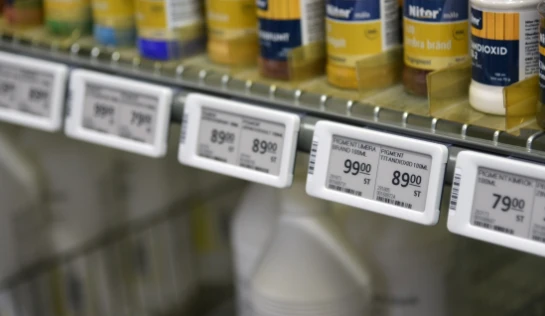
Walk into a modern supermarket, and you might notice the small electronic screens along the shelf edges that have replaced traditional paper price tags.
On the surface, this appears to be a simple material substitution-from paper to screens. But if you dig deeper, you'll find that behind this seemingly simple technology lies a profound transformation in retail operations logic, complex business dynamics, technological choice dilemmas, and ethical controversies that have yet to be fully discussed.
The ESL-not the superficial conclusions like "saves labor" or "high initial investment," but a deep dive into technical principles, economic logic, consumer psychology, legal boundaries, and market realities.
Summary
ESL makes sense for a specific type of retailer, and the rest are probably wasting their money.
If a retailer is running 50+ stores, changing prices daily, and has already invested significantly in getting backend systems integrated-then ESL probably makes sense. That's the profile. Otherwise, retailers are probably buying expensive technology to solve a problem they don't actually have.
What Even Is an ESL?
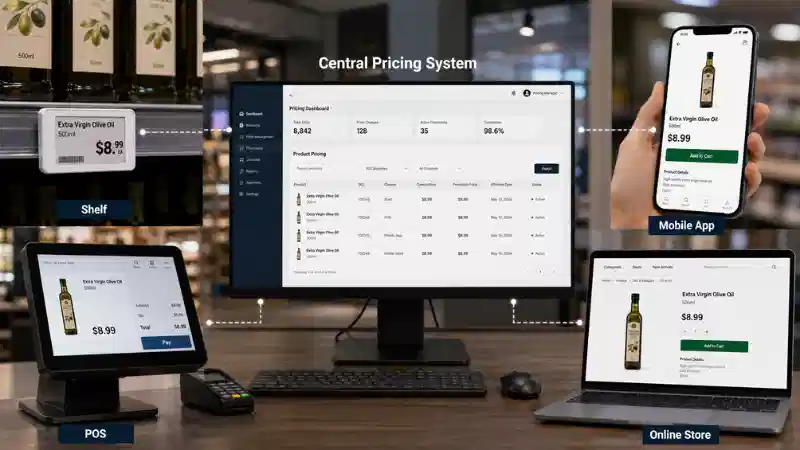
An electronic shelf label is essentially a small wireless display terminal. It consists of three core components: a display screen, a communication module, and a power system. These labels connect to a backend management system via wireless networks. Retailers can modify prices or product information in the central system, and the changes sync to all relevant in-store labels within seconds to minutes.
Each component involves technical choices that directly affect ESL's performance in real-world deployment.
E-ink dominates. There are millions of microscopic capsules filled with black and white particles. Hit them with an electric charge, and the particles rearrange to form whatever text or image you need. Once those particles settle, they stay put-no power needed to maintain the display. That's why these things can run for 5 to 10 years on a single battery. They're also readable in direct sunlight, which matters significantly for stores with big windows. The downsides? Slow refresh-the screen will flash and flicker for a second or two during updates. Limited colors, mostly black and white with maybe red or yellow for additional cost. And they perform poorly in the cold, which becomes a real problem in the freezer aisle.


LCD screens are similar in principle to smartphone screens, with rich colors and fast refresh rates, capable of displaying dynamic content and even video. They require continuous power to maintain the display and are usually only used for specific scenarios like promotional end caps. Segmented displays are similar to calculator screens-lowest cost but extremely limited functionality, and are gradually being phased out of the market.
The Maintenance Reality
Vendors often tout that ESL can be "set and forget," running automatically for years without intervention. Reality is not so rosy. The 5-10 year battery life is a theoretical value under ideal conditions. Actual lifespan depends on update frequency, ambient temperature, communication conditions, and other factors. In high-frequency update scenarios, batteries may need replacement in 3-4 years. And replacing batteries is labor-intensive work-each label needs to be checked for charge level, removed, battery replaced, and reinstalled. One store manager described battery replacement days as feeling like defusing bombs, afraid of breaking the labels. Equipment failures are also inevitable. Screen damage, communication module failure, and bracket breakage can all happen. For a store with tens of thousands of labels, dealing with several hundred faulty labels per year is quite normal.
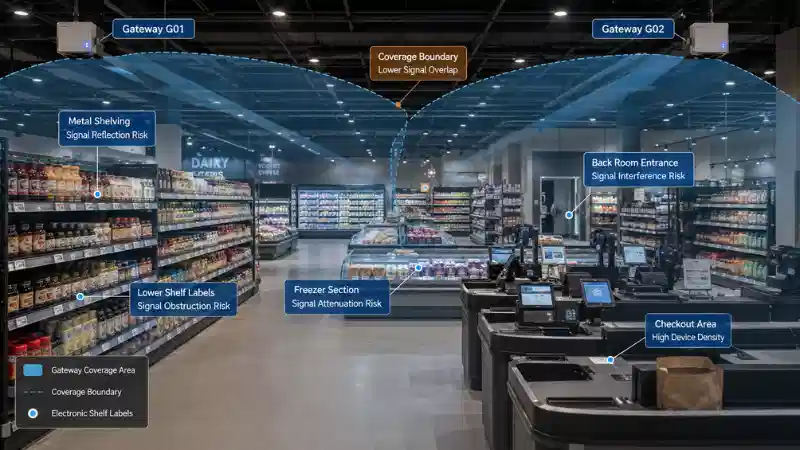
Temperature sensitivity is overlooked by many retailers. E-ink refresh speed significantly decreases in low temperatures and may not function properly. ESL label failure rates in freezer and refrigerated sections are noticeably higher than on ambient temperature shelves. Some stores have had to purchase special low-temperature models specifically for these areas, which cost considerably more.
Color representation is another limitation. Most ESLs can only display black and white, with some products supporting a third color. True full-color e-paper labels are expensive and have slower refresh speeds and shorter lifespans. Rich and colorful promotional graphics still require traditional printed materials.
Technical Infrastructure
Zigbee was the old standard, BLE is taking over, some vendors push proprietary solutions that create vendor lock-in. Selecting a major vendor using BLE is advisable. Retailer ESL projects rarely fail because of protocol selection. Failures occur for other reasons discussed below.
A complete ESL system is far more than just the labels themselves. The backend requires management software to maintain the product database, set pricing rules, and schedule update tasks. In-store, communication gateways need to be deployed-these gateways receive backend commands and broadcast them to the labels. Large stores may need dozens of gateways to ensure coverage.

Centralized architecture puts all processing in the cloud or headquarters servers, making unified management convenient, but with high network dependency-once the store loses internet connection, price updates are interrupted. Edge computing architecture deploys processing capabilities locally at the store level, allowing continued operation during network outages, but increases the complexity and maintenance costs of local equipment.
That's the technical foundation. What actually matters is whether any of this translates into real value for specific situations-which is where things get interesting.
The Labor Savings Myth
Labor cost savings are often exaggerated by vendors. One regional chain's leadership was initially excited, thinking they could eliminate two stock clerk positions. When calculating how much labor time was actually spent on changing price tags-it turned out to be only about ten hours per week, and it was done by staff before opening in the morning, not counting as extra labor. Paper price tag replacement is usually done by store employees during relatively slack times and doesn't necessarily require additional hiring. Moreover, the ESL system itself requires personnel for daily inspection, battery replacement, and troubleshooting. Many retailers make "labor savings" the biggest selling point in ROI calculations, only to find actual savings far below expectations.
Yes, replacing traditional paper price tags is demanding physical labor. A large supermarket with tens of thousands of SKUs may have hundreds or even thousands of prices to adjust each week. Employees must print new price tags, traverse aisles to find corresponding products, replace old tags, and ensure tags accurately match products. This process is not only time-consuming but also error-prone-incorrect price tags lead to checkout disputes and even legal issues.
ESL fundamentally changes this process. Price adjustments are made in the backend system and automatically sync to all labels via wireless network. The entire process can be completed in minutes with accuracy approaching 100%.
But that efficiency gain doesn't automatically translate to headcount reduction.
Dynamic Pricing: The Real Value Proposition
For retailers seriously considering ESL, dynamic pricing capability is the real reason worth investing. Traditional paper price tags make price adjustments a high-cost operation, so retailers tend to maintain price stability. ESL reduces the marginal cost of price adjustments to near zero, making frequent price changes possible.
This opens up a series of strategic possibilities: real-time response to competitor price changes; flexible pricing based on inventory conditions-discounting fresh products nearing expiration to reduce waste; implementing different prices at different times of day-such as raising prepared food prices during lunch hours, discounting bread at night to clear inventory.
Economists have a term for this-price discrimination. The extreme version, where retailers charge each person the absolute maximum they'd pay, is technically possible but legally and ethically off-limits. What ESL actually enables is the milder form: different prices for different times or customer segments. That's legal almost everywhere and is what most retailers are actually doing.
The frustrating reality in this industry: vendors sell ESL as a labor-saving technology when the real value proposition is dynamic pricing capability. But dynamic pricing requires sophisticated pricing strategy, robust data analytics, and careful consumer communication-capabilities most retailers haven't developed. Buying ESL without these foundations is like buying a race car without knowing how to drive stick.
Consumer Backlash
The EU is addressing digital pricing under DSA and DMA. In the US it varies by state.
Frequent price changes may erode price anchors. In traditional retail, consumers remember the "normal price" of frequently purchased items and use this to judge the attractiveness of promotions. When prices change frequently, these price anchors may be weakened.
More troublesome is the feeling of "being manipulated." Once consumers realize that retailers are using dynamic pricing, they may feel manipulated. In recent years, social media has occasionally seen consumers complaining that certain supermarkets "price differently based on who you are" or "prices are different in the morning versus the evening." While often misunderstandings, the reputational risk is very real. Some U.S. supermarkets experimenting with time-based pricing had to suspend their experiments due to overwhelming online criticism.
There's a notable generational split. Younger shoppers seem fine with prices changing-perhaps because they're accustomed to Uber surge pricing and Amazon's fluctuating prices. Older customers get genuinely upset. One store manager reported an elderly woman accused him of "cheating seniors" when she noticed the orange juice price changed from her last visit. It wasn't even dynamic pricing-just a regular promotion ending. But that's the perception problem retailers face.
Cost Analysis
When retailers evaluate ESL investment, ROI calculations often have systematic biases. Labor cost savings are overestimated because price tag replacement work is often done during off-peak hours when employees may not be at full capacity. Dynamic pricing benefits are difficult to predict accurately; overly aggressive dynamic pricing may trigger consumer backlash. Hidden costs are underestimated or even completely omitted.
Hardware procurement is just the beginning. The price of a single ESL label varies by size, features, and purchase volume, ranging from a few dollars to tens of dollars. A large supermarket may need tens of thousands of labels. Then there are infrastructure costs-communication gateways, network equipment upgrades, backend management software subscription fees. There are also deployment costs-initial deployment of a large store may take several weeks and a professional team.
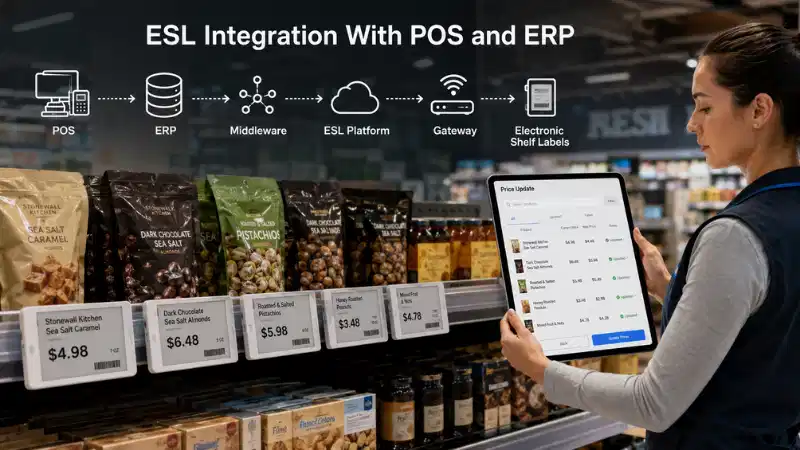
The most easily overlooked is integration cost. ESL systems need to interface with existing POS systems, ERP systems, and inventory management systems. These systems often come from different vendors and use different data formats and interface standards. System integration delays are the norm-work originally planned to take a few months often drags on for half a year or even a year, especially in stores still using old checkout systems. This is very common in the industry.

Training costs and ongoing operational and maintenance costs cannot be ignored either. Batteries need regular replacement, faulty labels need repair or replacement, and software needs upgrades and maintenance. Only by adding up all these costs can you calculate the true Total Cost of Ownership (TCO).
Opportunity cost should also be considered-funds invested in ESL could have been used for store renovations, e-commerce development, or supply chain optimization.
Target Market

ESL economics have obvious economies of scale. Large chain retailers can obtain better purchase prices, spread fixed costs, and the more frequent the price adjustments, the more obvious the advantages.
For small independent retailers, the situation is completely different. If a store has fewer than 5,000 SKUs and fewer than 50 price adjustments per week, the ESL investment return may take more than 7 years to realize. For most small and medium retailers, this is simply not a reasonable investment.
Too many mid-sized grocers have spent six figures on ESL projects that delivered maybe 20% of the promised ROI. Most independents and small regional chains should walk away. Same goes for stores where the IT department is basically "whoever knows computers," or anyone whose primary motivation is "competitors are doing it." That last one is more common than expected, and it's a terrible reason to spend this kind of money.
Common Pitfalls
Technology selection errors are the most common pitfall. Some retailers chose small vendors' solutions to save money, only to find the vendor was acquired, pivoted, or simply went bankrupt, with follow-up service unable to keep up. They ended up having to replace all deployed labels. Such cases are heard of from time to time in the industry, with losses often running into millions.
Integration issues have already been discussed and won't be repeated.
There's another point many don't anticipate: employee resistance. It's not uncommon to encounter union opposition or employee passive cooperation during ESL deployment, worried that it will lead to layoffs. Even though management promises no layoffs, project delays and the need for extensive communication and negotiation happen from time to time.
Additional Considerations
The value of ESL lies not only in displaying prices but also in being part of the entire retail digital infrastructure. When ESL systems integrate with inventory management systems, POS, and ERP, smarter operations can be achieved. The system can automatically monitor a product's sales velocity and inventory levels, automatically triggering price promotions when inventory is too high, and sending restocking alerts when inventory is running low. Some advanced ESLs also have LED indicator lights that can be used with picking systems-when employees process online orders, the target product's label will flash as a prompt.

This linkage requires a high degree of system integration, which is also one of the main challenges of deploying ESL.
Customer experience gets a minor upgrade too-no more "one price on the shelf, another at the register" situations. Modern ESLs can display richer information like origin, nutritional facts, and member-exclusive prices. As for the environmental angle that some vendors promote, skepticism is warranted. Yes, the 5-10 year lifespan probably beats continuous paper use, but rigorous lifecycle studies that account for rare metal extraction and electronic waste are lacking. It's not a reason to buy ESL.
Final Word

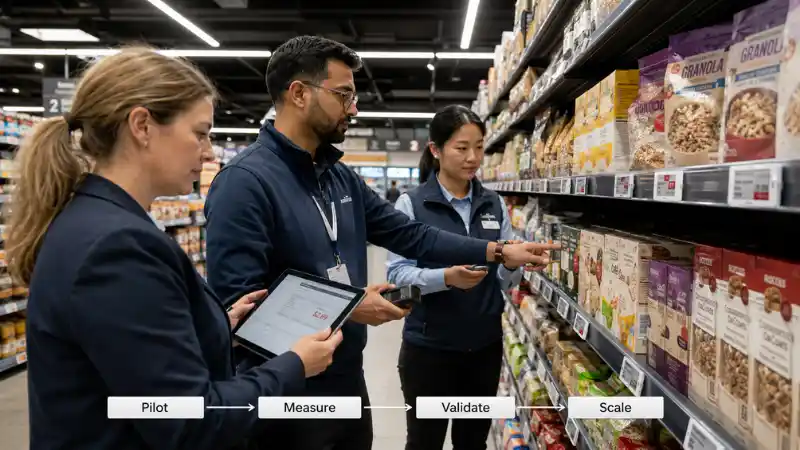
For those still interested, starting with a genuine pilot in two or three stores is advisable. Measuring everything obsessively for at least six months before signing a chain-wide contract is essential-hard data from one's own operation should inform the decision. Vendors will push for early commitment. Resistance is advisable.
ESL is a powerful tool for the right retailer. But "right retailer" is a much smaller category than the industry wants retailers to believe.